


We are publishing this without a paywall.
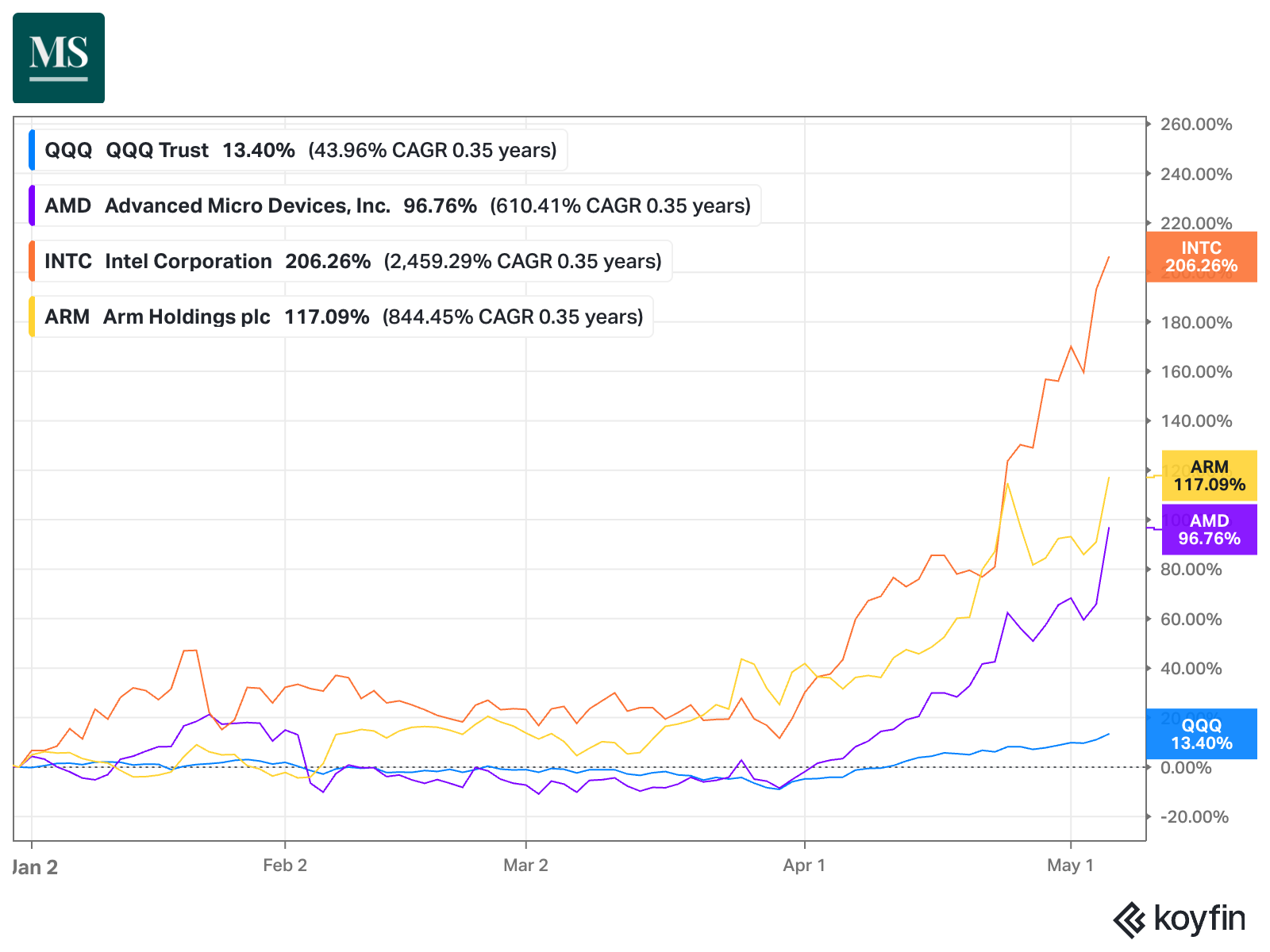
It’s impossible to miss what’s happening in the AI compute market now. While QQQ is up 13% YTD, AMD is up 96%, Arm Holdings is up 117%, and Intel, a company that most investors wrote off, is up 206%!
The performance has been so mind-bending that even the President is posting stock gains.
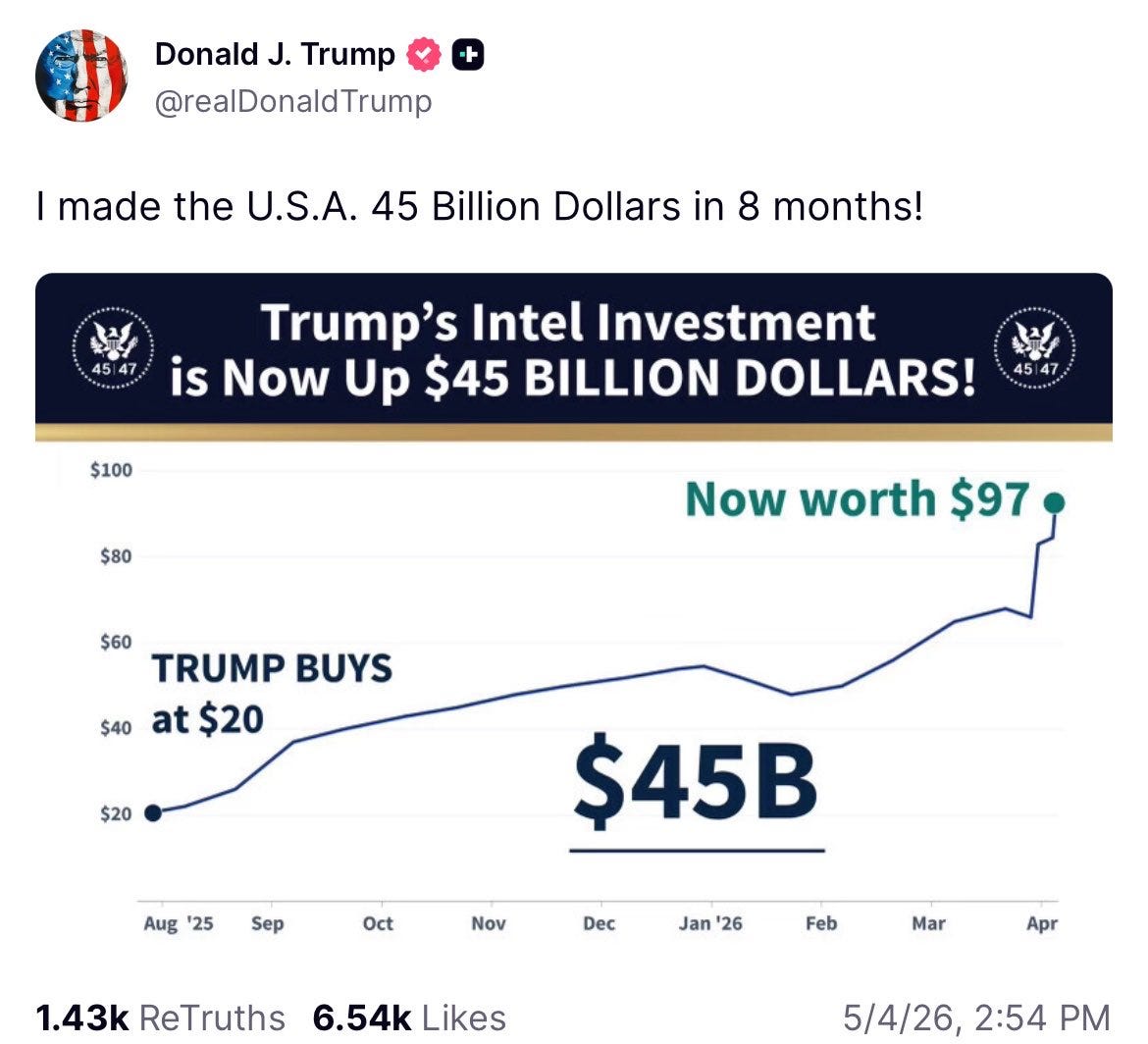
Jokes apart, there is a fundamental reason these companies are getting re-rated — AI, specifically AI agents.
What is an Agent?
An agent is simply a clever bit of software that acts autonomously to achieve a certain goal. For example, if you want to find a house to rent in New York, you can spin up an agent and share your requirements (rooms, space, neighborhood, budget, etc.). — The agent will then browse the web, filter the houses based on your criteria, and give you a shortlist.
Before AI, automating this would have taken a few days of coding, and you would most likely just do it yourself. But with AI, you can just give the task, and it will write the underlying code and handle it for you.
Now imagine the potential if it could automate almost anything you ask it to. That’s what Manus promised to be (it’s worth watching the 4-minute video to get an idea of what an agent is and what’s possible). The demand for the product was so much that they had a 2M waitlist a few days after launch.


So why are compute stocks rallying?
Nvidia has more than 10’xd since the launch of ChatGPT. This is expected as we were using massive arrays of Nvidia GPUs to train and serve these Large Language Models. But AI has advanced from a chatbot that answers questions to an operator that takes action.
Coming back to the above example of a house search, the agent has to open up a browser, navigate to a particular page, scrape the data, compare the listings, and repeat this hundreds of times.
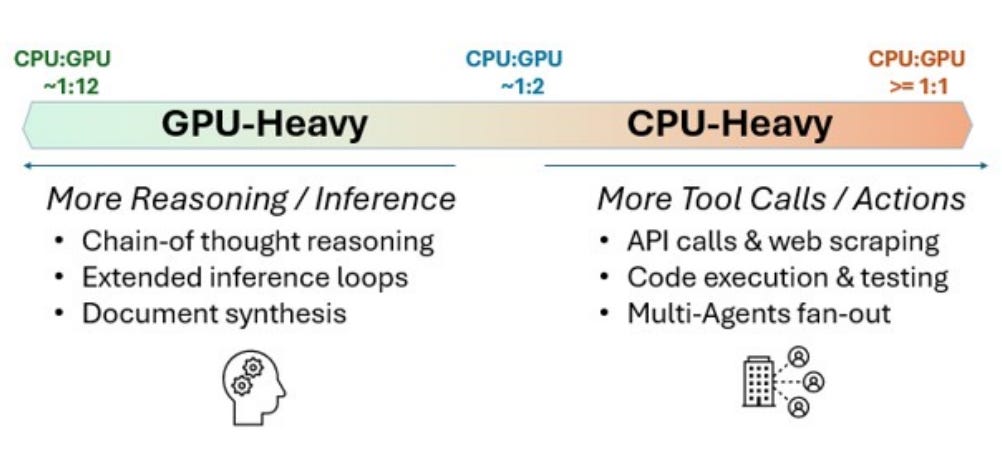
Most of these tasks load the CPU more than the GPU. So the ratio of CPU work to GPU work is much higher in an agentic system than in a simple chatbot.
According to Morgan Stanley Research, earlier server builds used 1 CPU per 12 GPUs. With rising agentic workloads, the ratio is now closer to 1 CPU per 2 GPUs, which is driving the CPU bottleneck.
Where are we in the cycle now?
This is where it gets interesting. While the current cycle is definitely looking stretched (and we took some profits this week), the long-term outlook is promising.
Right now, agentic use cases are more hobbyist tinkering with an idea than full-fledged commercial deployments. The moment when (if?) an enterprise agent, which is on 24x7 and can do complex operations, we see an inflection point in token usage. When an agent can run profitably (i.e., the value of the work it does exceeds its token usage), adoption will explode.
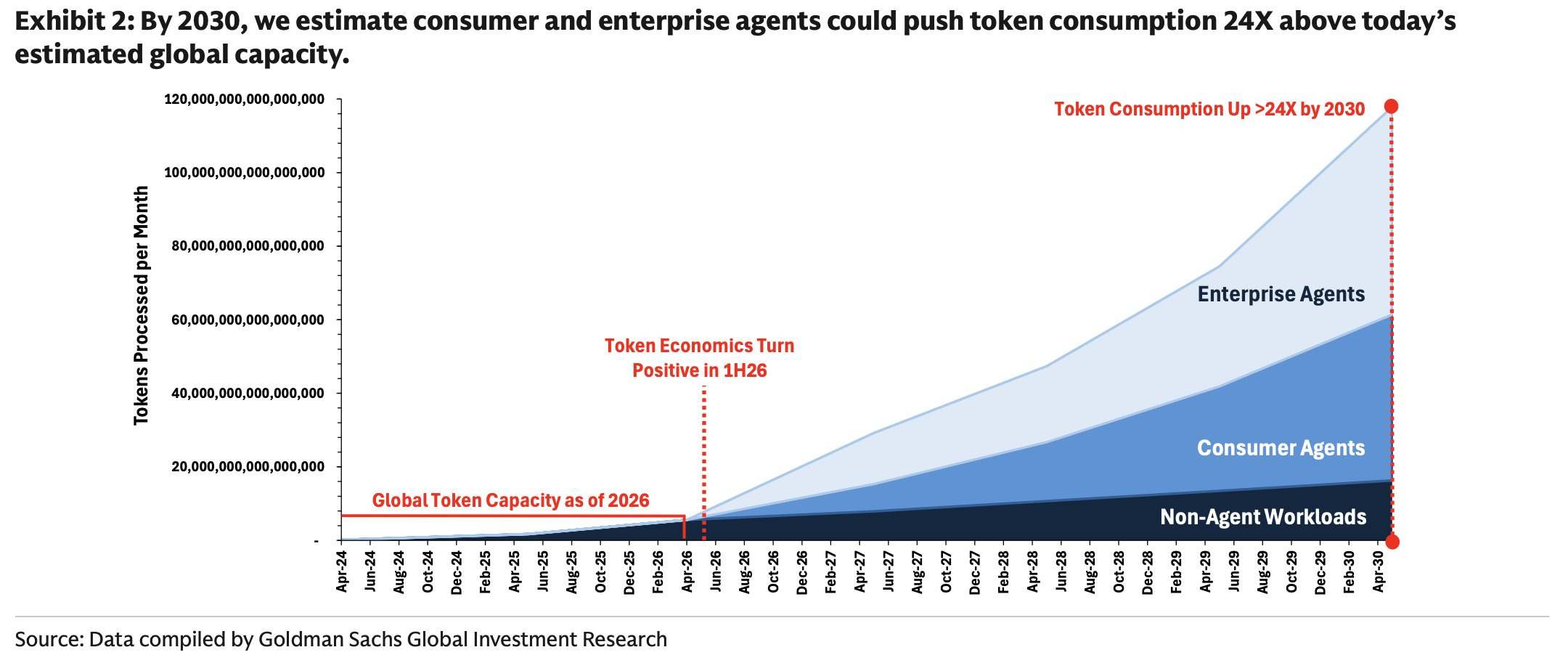
Putting this together, we have a good outcome for hyperscalers. With the cost to process each token falling, the price per token stabilizing, and demand exploding, hyperscalers will be able to dramatically improve their margins.
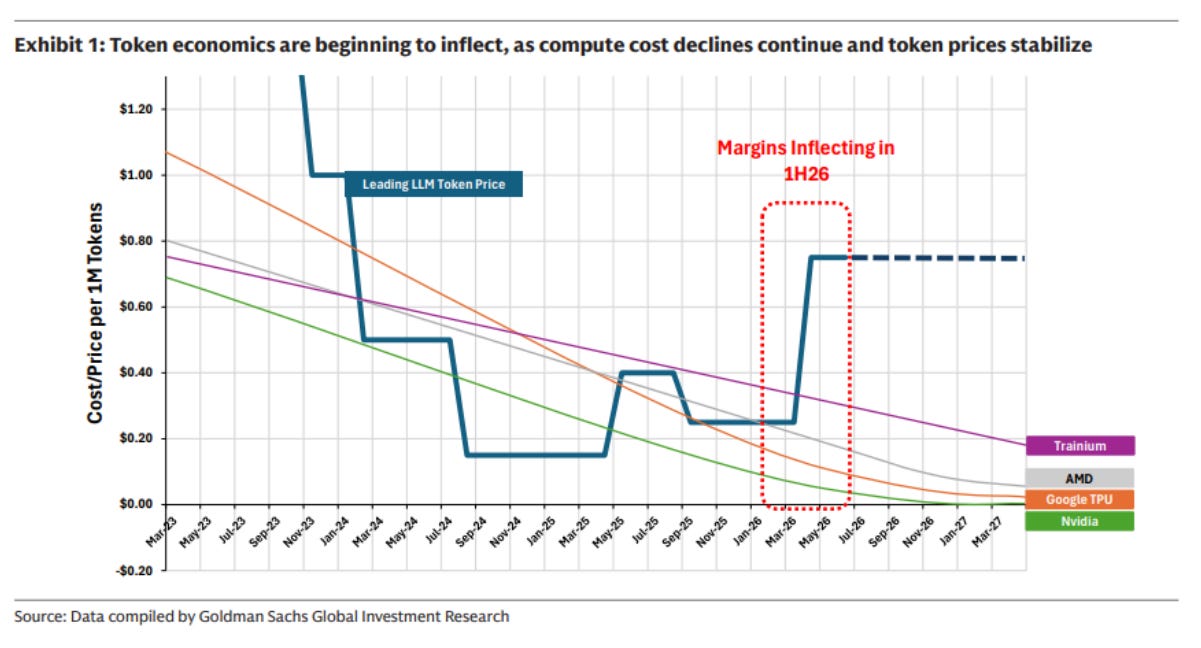
The biggest overhang on the hyperscaler (GOOG, AMZN, META) stocks is whether the hundreds of billions spent on AI data centers will provide adequate ROI. The moment they show margin improvement, the companies will get re-rated (also the reason you see analysts increasing their price targets after the stock pumps. New information is passed to the valuation model, resulting in a new target price. There is no alpha in following price targets without understanding the underlying reason for the rerating.)
The CPU Trade
If we are purely looking at exposure to CPU, there are only 4 companies in the field who is having meaningful exposure:
AMD — is the market leader in data center CPUs, and the gap is expected to widen further with the launch of 2nm Venice chips. AMD should get a better share of the incremental revenue driven by agentic demand for CPUs.
Intel — is staging a comeback with Xeon 6 processors being adopted by Nvidia and Google as the CPU "head node" in AI infrastructure. Plus, being strategically critical to the US does not hurt.
Nvidia — has launched its AI CPU, Vera, designed exclusively for AI agents.
ARM — launched its first-ever data center processor — AGI CPU focused on handling agentic tasks. Rather than going the raw-power route, ARM is developing a more efficient processor to reduce token costs.
But we would argue that much of the upside here is already priced in. AMD, Intel, and ARM all have more than doubled YTD.
A better trade is to build an agentic basket with:
CPU Compute
High Bandwidth Memory & Storage
Foundry & Chip design
PCB, Substrate, and Controllers
Security & Payments
This way, rather than crowding into one overstretched sector, it gives you clean, diversified exposure across the full agentic stack. This is exactly what we are working on, and we will be publishing the full report next week.
Disclaimer: This is not financial advice or a recommendation for any investment. The Content is for informational purposes only, you should not construe any such information or other material as legal, tax, investment, financial, or other advice.
Market Sentiment is now fully reader-supported. A lot of work goes into these articles, and if you enjoyed this piece, PLEASE HIT THE LIKE BUTTON. It’s the only way new readers can discover our reports :)
Super, thank you for your article!
Notes on compute usually end the same way: someone still has to pay for the electricity.