


Grab a cup of coffee for this one. It’s one of our most in-depth reports (and it’s free!).
Successful investing comes down to finding a trend early and knowing when the thesis has become consensus. It’s the second part that trips up so many investors. While riding the trend up, it’s easy to think that it’s going to run forever. All the data and analyst projections point that way. But that’s rarely the case.
Right now, that is the AI infrastructure trade. Capital has crowded into a handful of winners, with valuations increasingly pricing in years of uninterrupted growth. While this has certainly helped our portfolio (+55.3% YTD), many of the obvious AI bottleneck trades have already become consensus.
We are bullish on the ROI AI capex will generate, but skeptical about how much projections will rise next quarter, especially since the ones running the show are clamoring to slow development. Any blip, however minor, will erase years of gains from these stocks.
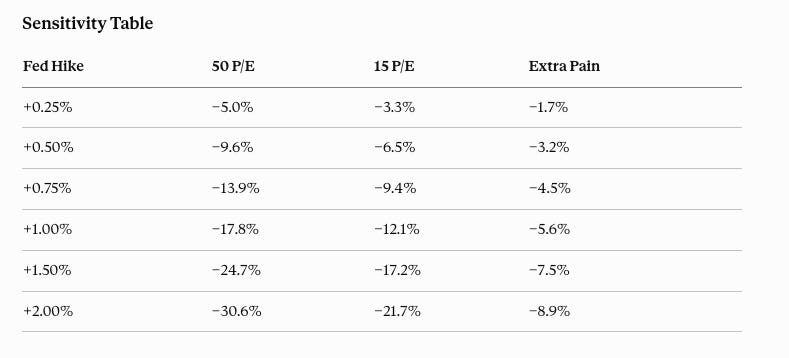
Plus, the Fed hiking rates will not be great for semiconductor companies — the real worry is not the 25bps hike: it’s a combination of a new hawkish Fed chair, sticky inflation (due to tariffs and the Iran war), and rising national debt.
Who makes the money with transformative technologies?
It’s not the first time investors have bet on a transformative technology to change the world. We have two good historical precedents: railroads and the internet. In both cases, we invested a single-digit % of our GDP into building railroads and telecommunications infrastructure.
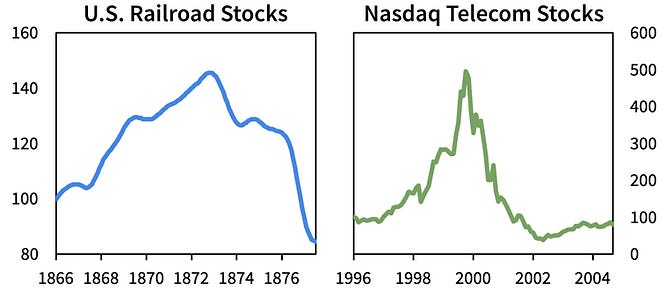
While both these technologies ended up changing the world, neither rewarded the long-term investors who funded the buildout. The key being long-term: short-term traders would have made a killing trading the volatility, but the index was more or less in the same place after the hype was over.
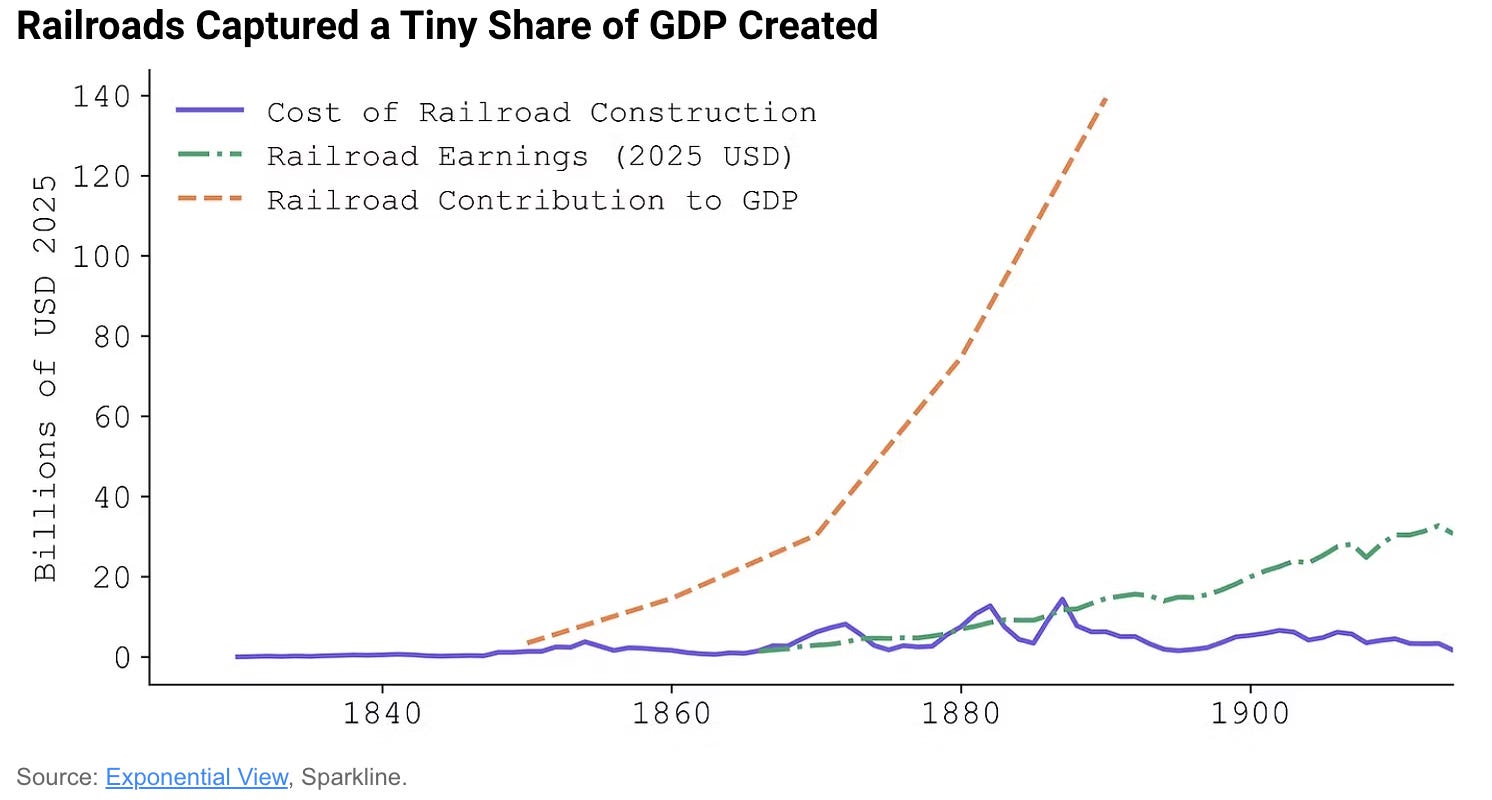
The problem with aggressive capital spending is that it’s almost always suboptimal. After the initial euphoria of rising capex driving up stock prices, you will realize you overpaid for everything from the land to the memory to even the fiber-optic cables.
The industry that creates the technology rarely captures the value it creates.
The railroad expansion saw hundreds of railroad companies go bankrupt, and the dot-com bust saw the telecom index collapse by 92%. Yet the infrastructure those failures left behind became the foundation for the winners that came after.
Standard Oil and Sears built their empires on the railroads, and Amazon and Netflix were built on the cheap bandwidth created by the fiber glut. The lasting winners in AI will also be the companies building on top of the infrastructure, not the ones laying it down.
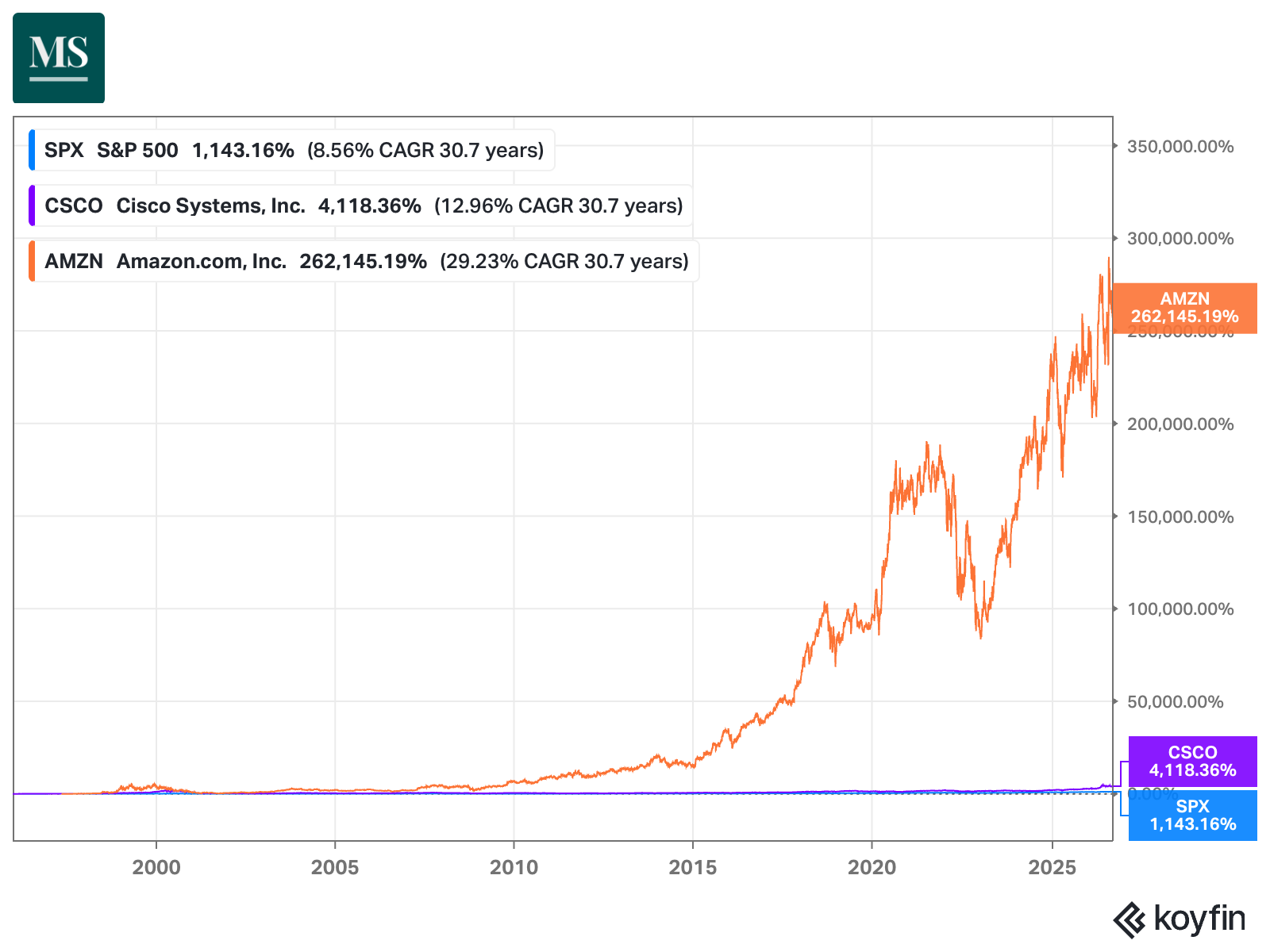
While Cisco's example is beaten to death, it’s still worth comparing it to Amazon. Cisco built the internet's plumbing: the routers and switches every website ran on, and was the world’s most valuable company in 2000. Then the bubble burst, and it took the company ~23 years to regain its ATH.
Yet, even after the recent AI run-up, the company is 1/6th the size of Amazon, which used the same network to become one of the most valuable companies ever!
All this leads to one simple fact:
Companies benefiting from AI have become the most underrated trade.
Here’s something we can guarantee most of you missed during all the AI hype:
In 2026, the Russell 2000 outperformed both the S&P 500 and the Nasdaq 100. The same trend holds over the trailing year.
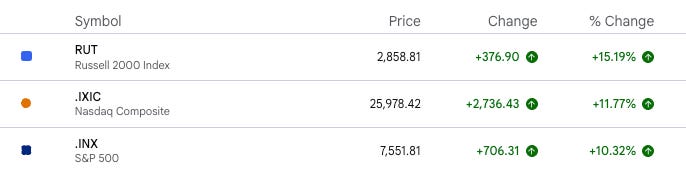
So why is an index of 2,000 small-cap companies outperforming one built on the very names everyone expects to change the world? We think the answer sets up one of the largest capital rotations in years.
Tracking the Token
Next year, AI Capex is expected to be ~$1.2T+. Based on our capex sustainability model, this should drive ~$2T of incremental revenue. This will be a fraction of the overall incremental revenue generated using AI (as a business, you don’t spend $100 on something unless it makes you back 2-3x that amount).
The question then is: who will be the beneficiaries who capture this value?
The simplest way to find out is to track the value chain. Take the example of Oil. The driller sells it for ~$70, the refiner turns it into jet fuel worth ~$90, the distributor sells it to the airline for $100, and the airline turns that fuel into a $400 seat.
As the commodity moves further downstream, each step adds value.
Commodity conversion doesn’t happen automatically; it requires unique assets. In this case, those assets are refineries, pipelines, and airplanes. These are the companies that benefit from adopting innovations and new tools that enable new commodities.
Apply the same logic to AI tokens, and one industry is massively benefiting: Software.
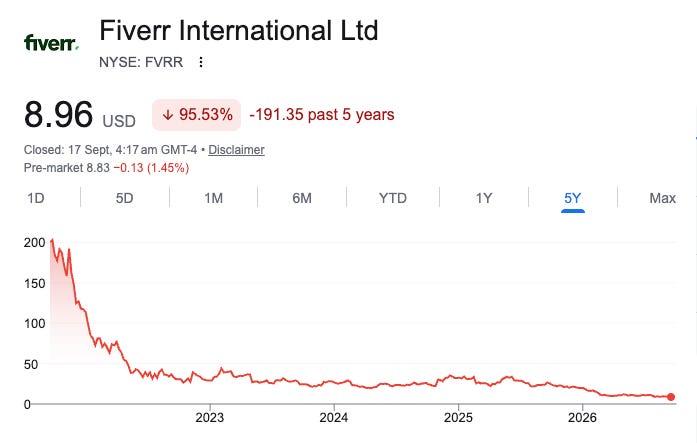
But not just any software — the ones with moats that AI cannot erode: proprietary data, distribution, workflow lock-in, or system-of-record status. Everything thinner will get squeezed by falling token prices, just like what happened with Fiverr. AI now handles the translation, basic design, and entry-level code that its marketplace was built to broker, and 2026 revenue is set to fall 14 to 17 percent.
So who are the beneficiaries?
1. Cybersecurity
While there is a lot of hype related to “agents escaping sandboxes”, our take is simpler: Frontier models have handed even a mediocre hacker the coding ability of the top 1%. We expect the number of attacks, especially on weak systems, to rise sharply.
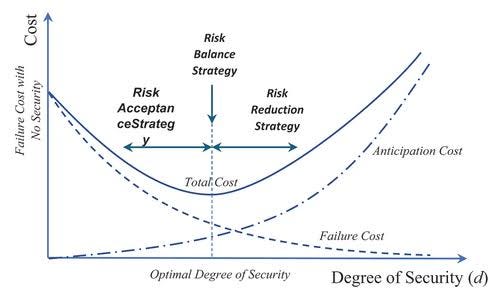
The diagram above shows how companies think about this trade-off. Security spending is weighed against the cost of a breach, and total cost bottoms out at an optimal level of defense. More attacks raise the expected cost of failure and push that optimal point toward heavier security.
The problem is that companies cannot respond by banning AI, because the productivity gain is too large to give up. So the balance shifts to a narrower question: give employees access to AI while placing strong guardrails on what data it can and cannot reach.
Which brings us to:
2. Horizontal & Vertical Software Applications
Horizontal platforms such as CRM, IT service management, and ERP run across the enterprise. They own the systems of record, the permission structures, and the workflows that agents must read from and act on. In an agentic environment, that ownership is the advantage. An agent cannot close a deal, resolve a ticket, or post a journal entry without touching these systems, which hands incumbents a durable role.
ServiceNow shows the transition working. Its AI book crossed $1 billion in annual contract value in Q2 2026, with agentic AI in production up 9x in nine months.
Vertical applications, built for a single industry, can hold an even stronger moat. Their workflows are specific, and building useful AI for them requires deep process knowledge that is hard to replicate. Guidewire in insurance, Procore in construction, and Autodesk in design are the type of businesses this favors.
3. Development Infrastructure
As the cost of building software falls to zero, a lot more applications will get built.
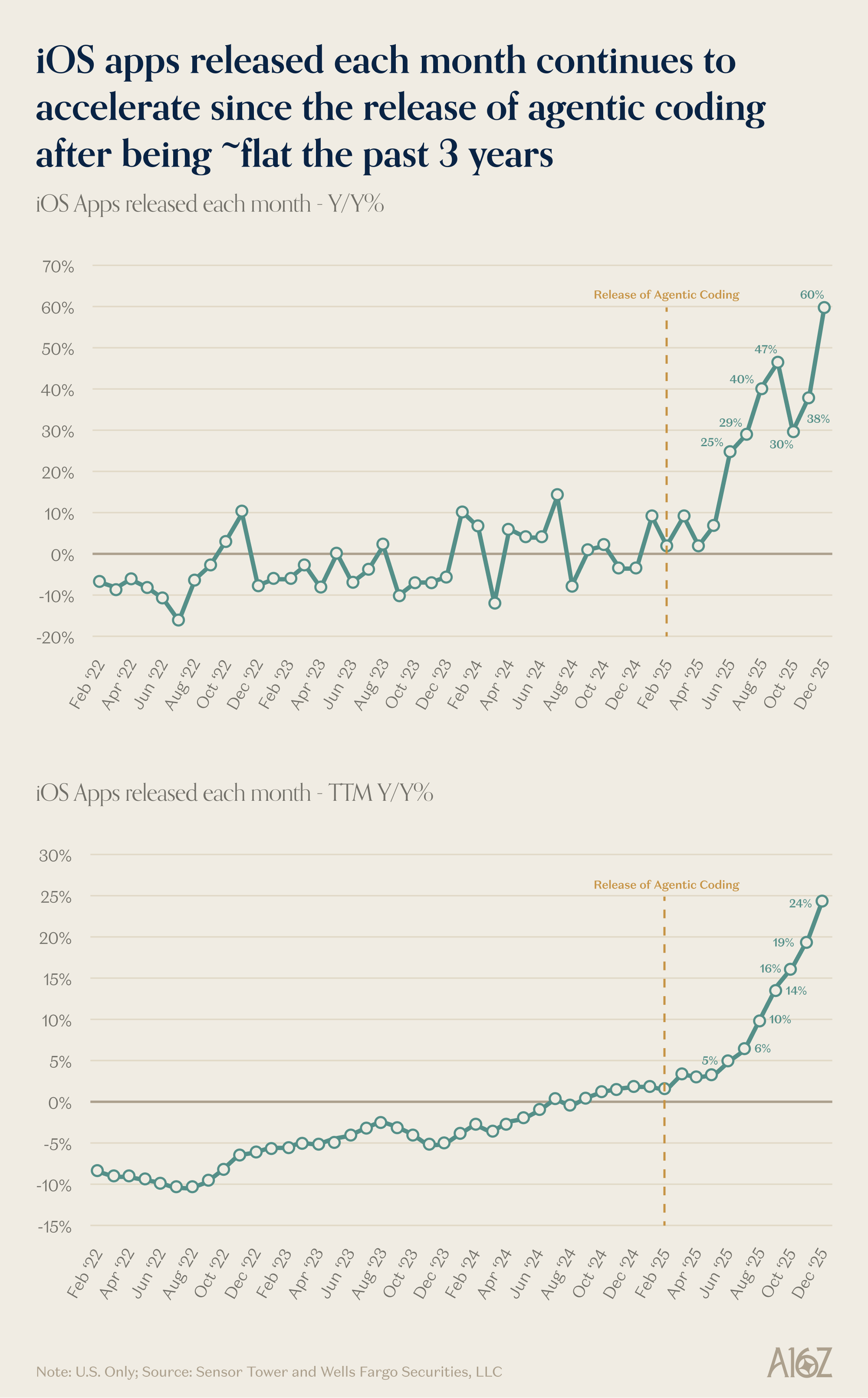
As more applications are built and deployed, the infrastructure and tooling needed to develop, connect, secure, and operate them should grow with them.
MongoDB, for example, has expanded beyond its traditional database offering with AI capabilities such as vector search, allowing developers to build AI applications on top of existing data infrastructure. Similarly, companies such as Palantir and Snowflake provide platforms that enable enterprises to develop and deploy AI applications using their proprietary data and workflows.
4. Recommendation Engines
An often overlooked beneficiary is ad targeting and recommendations. Platforms with large consumer bases gain the most, since AI improves with more user data. Reddit and Meta use it to match users with more relevant content and products, boosting both engagement and ad performance.
Unity shows a related version of the same idea: AI lowers the cost of building a game and then improves how those games are discovered and monetized. PocketFM takes it further, using AI-generated content to expand its catalog and scale its audience across global markets at low marginal cost.
5. Low-cost Compute
Not every task needs a frontier model. Writing an email response or updating a deck does not require Claude Fable 5. An open-source model can do the same work at a tenth of the cost or less, and as open models get smarter, the share of workloads running on them will keep expanding.
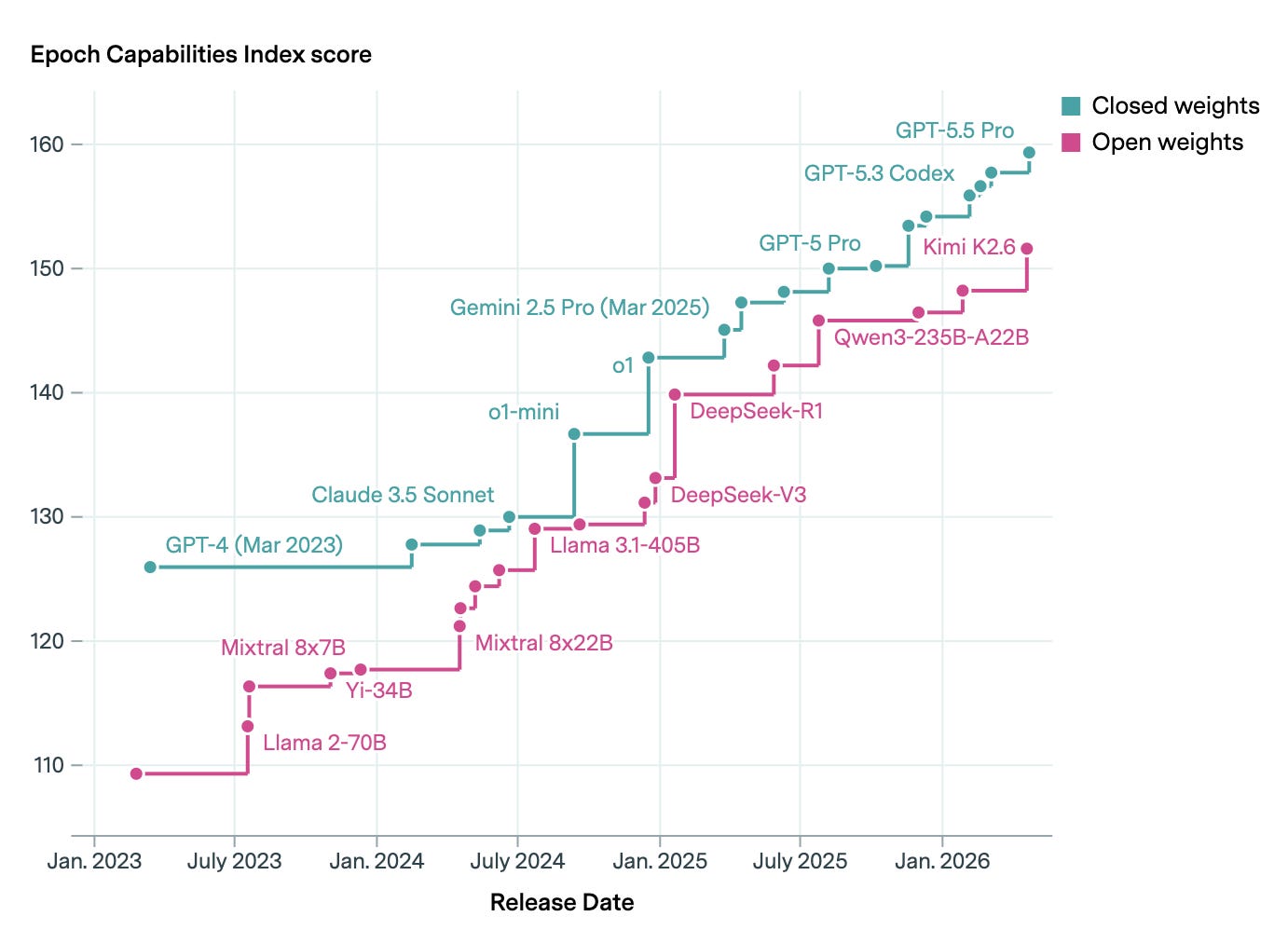
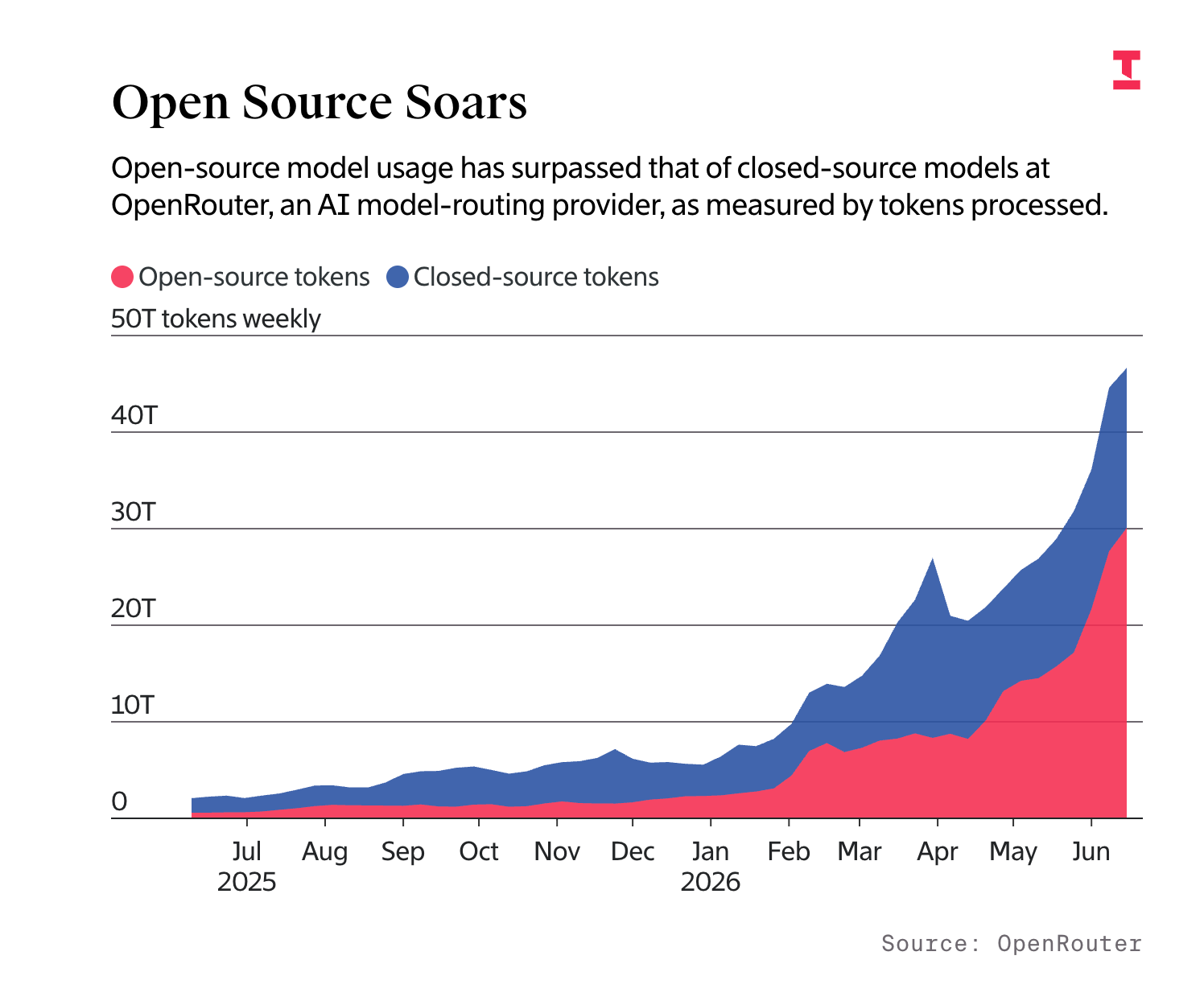
Usage will keep exploding while the price per token collapses, so the pie grows even as every workload gets cost-optimized. That means serving intelligence becomes a race to the lowest cost per token, the same way Japanese automakers won the US market by delivering most of the performance at a much better price.
If that is the race, hyperscalers have no option but ASICs.
Cheap intelligence into durable margin
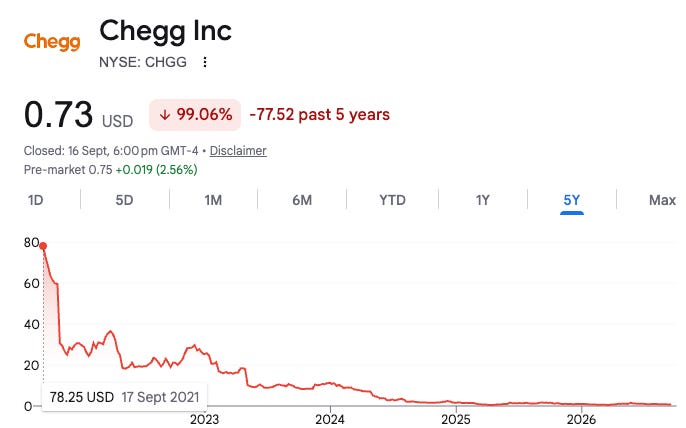
Ultimately, it comes down to this — if intelligence becomes abundant and cheap, who stands to benefit? Our answer starts with proprietary data a model cannot reconstruct. But the bar is higher than owning data, and the losers look like winners until they don't. Chegg owned one of the largest databases of solved academic problems in existence, reportedly more than 79 million of them. It did not matter. A free general model answered the same questions well enough; Chegg had no workflow to hold the student.
The result was inevitable:
The second filter is trust but verify, because AI-washing is everywhere. Every management team now claims to be a winner, and the metrics are easy to dress up. Salesforce booked over $1.5 billion in Agentforce ARR this quarter, but only after folding Slackbot and other products into the definition. We will judge adoption by usage, pricing, and margin, not by the earnings call.
This is why we are tilting toward companies that convert cheap intelligence into durable margin, mainly in software and service-heavy sectors, and we will rotate out of some capex-driven semiconductor holdings over time to fund it.
Subscribers will get the full portfolio changes next week (before we execute them). Please consider upgrading your subscription to support our work and to get access to all the reports.
If you made it till here, I would love to hear what you think:
Disclaimer: Market Sentiment work is provided for informational purposes only, is intended solely for readers in the United States, and should not be construed as legal, business, investment, or tax advice. You should always do your own research.
Interesting view instead of the just reheated AI will kill humanity, and the gaslighting and manipulation by the usual AI scammers in charge.
It sounds more like AI will kill a lot of portfolios.